Working Calculator
 Personal Project
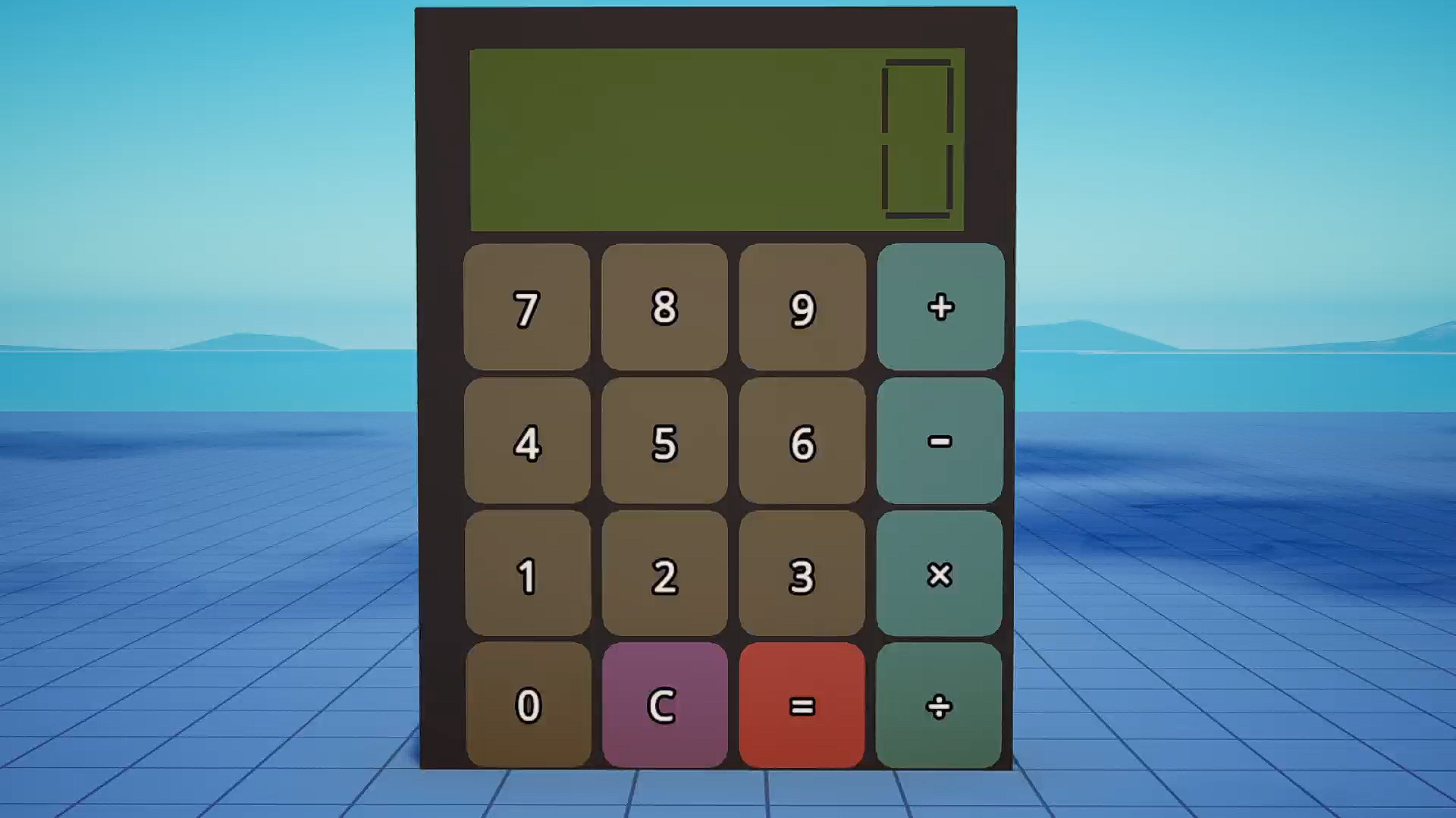
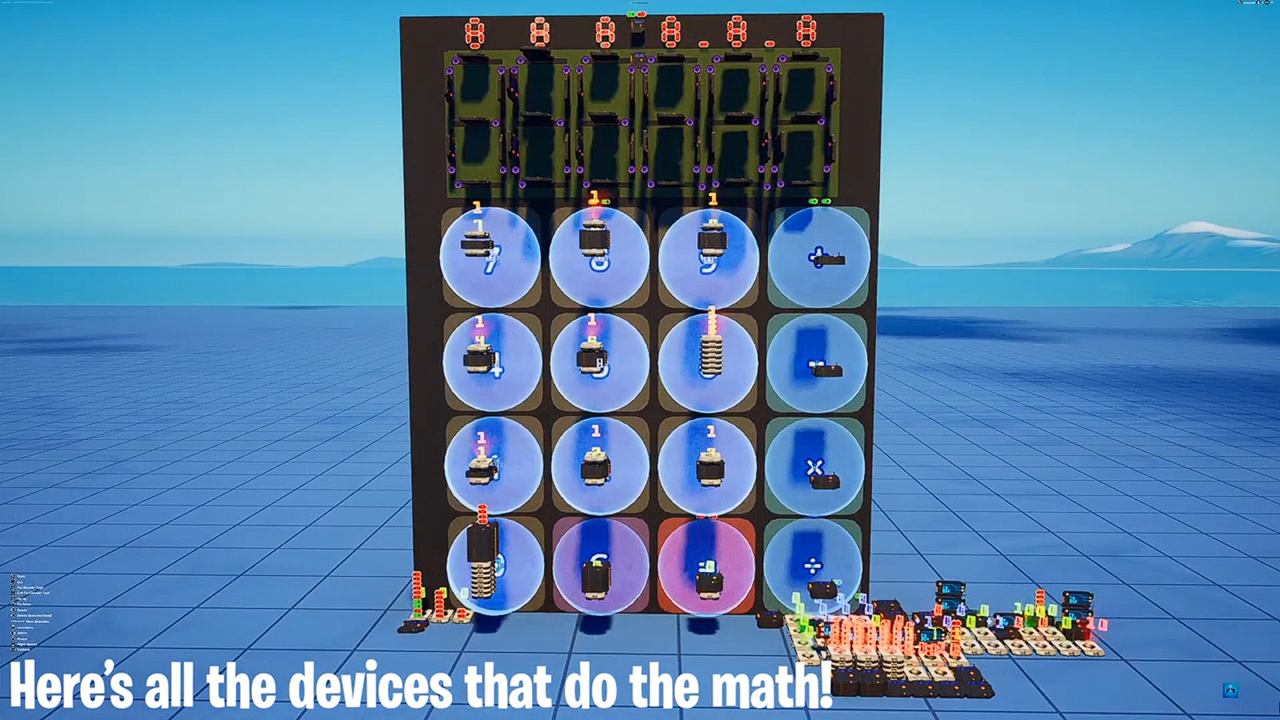
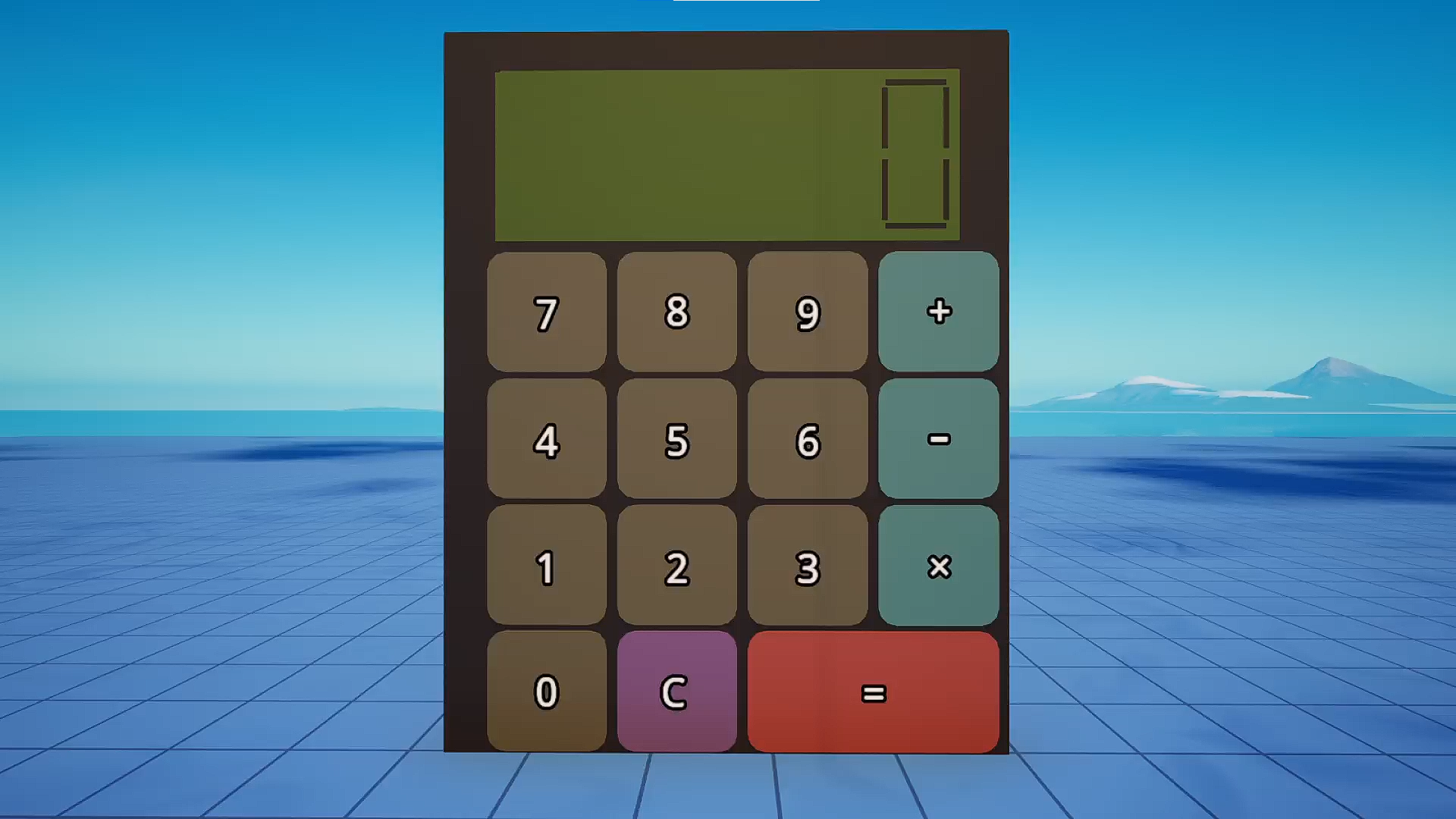
Heavily inspired by a video uploaded by Pimit (who I later worked with at Beyond Creative), I decided to use my knowledge of Fortnite Creative devices and channels to build a fully functioning calculator. The calculator featured addition, subtraction, multiplication and division, and allowed the input of up to 3 digits. Results were able to appear as negative numbers and display up to two decimal places.
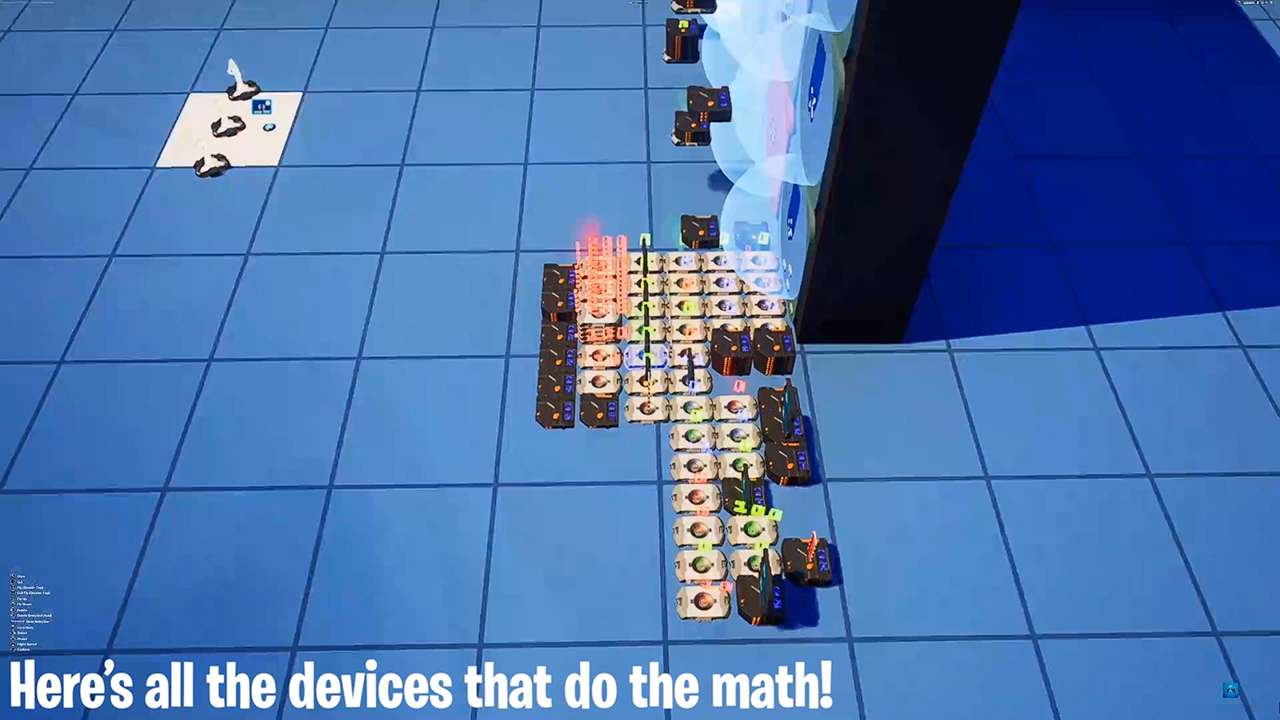
The build used a sophisticated input system that was fully resettable by pressing the clear button, and a series of seven-segment displays for the output. It used hundreds of channels and was modular, allowing me to add simple division a month after the initial build, which displayed "Error" on screen if the result was not a whole number (or when dividing by 0). A few days later, I was able to come up with a method to calculate the decimal values by using repeated subtraction, which was easy to add thanks to the modular design and reusable components. I also added the ability to shoot the inputs with a pistol rather than pressing the buttons manually, to make interaction much easier.
I used Fortnite Creative's scoreboard feature as a rudimentary variable, along with many Score Manager devices to store all the numbers used for the calculations. The result of the math was decoded digit-by-digit from the scoreboard into these devices, and then the data was fed back into the scoreboard to further decode each digit into the seven-segment displays. I made use of many triggers that acted as a "tick" of delay in the channel system to control the order of operations smoothly.
The day that UEFN was released, I decided to learn Verse by deleting all of the devices that calculate the math, and recreated the mechanics in a Verse script. To prepare for UEFN's release, I created a JavaScript prototype of the calculator's logic, so that I could understand what would be required to convert it to Verse. The Verse version of the calculator was significantly faster than the original, and allowed results to display up to 3 decimal places instead of only 2.